

Why Upgrading Your Ductwork During a 16 SEER Installation Actually Pays Off
The Efficiency Trap: When Premium Equipment Meets Compromised Airways
Your old air conditioner finally gave out, and you might be wondering why upgrading your ductwork during a 16 SEER installation actually pays off when the new unit itself is already a major investment. At ADI Heating & Air Conditioning, it is a frustrating reality we see many homeowners face: you purchase top-tier, high-efficiency equipment, yet the house still suffers from hot spots, poor airflow, and stubbornly high utility bills. The culprit is almost always the distribution network hidden behind your walls and ceilings. A premium cooling unit cannot overcome the severe limitations of aging, compromised airways.
To get the true value out of your new HVAC system, addressing the air distribution network is just as critical as selecting the right equipment.
The Disconnect Between Premium Equipment and Aging Infrastructure
Homeowners often invest heavily in a premium equipment upgrade but completely overlook the distribution system. A 16 SEER efficiency rating represents a highly capable, energy-saving piece of machinery. However, this rating is essentially a measurement of potential. The unit is designed to generate perfectly conditioned air using minimal electricity, but it relies on an airtight, properly sized pathway to deliver that air into your living spaces.
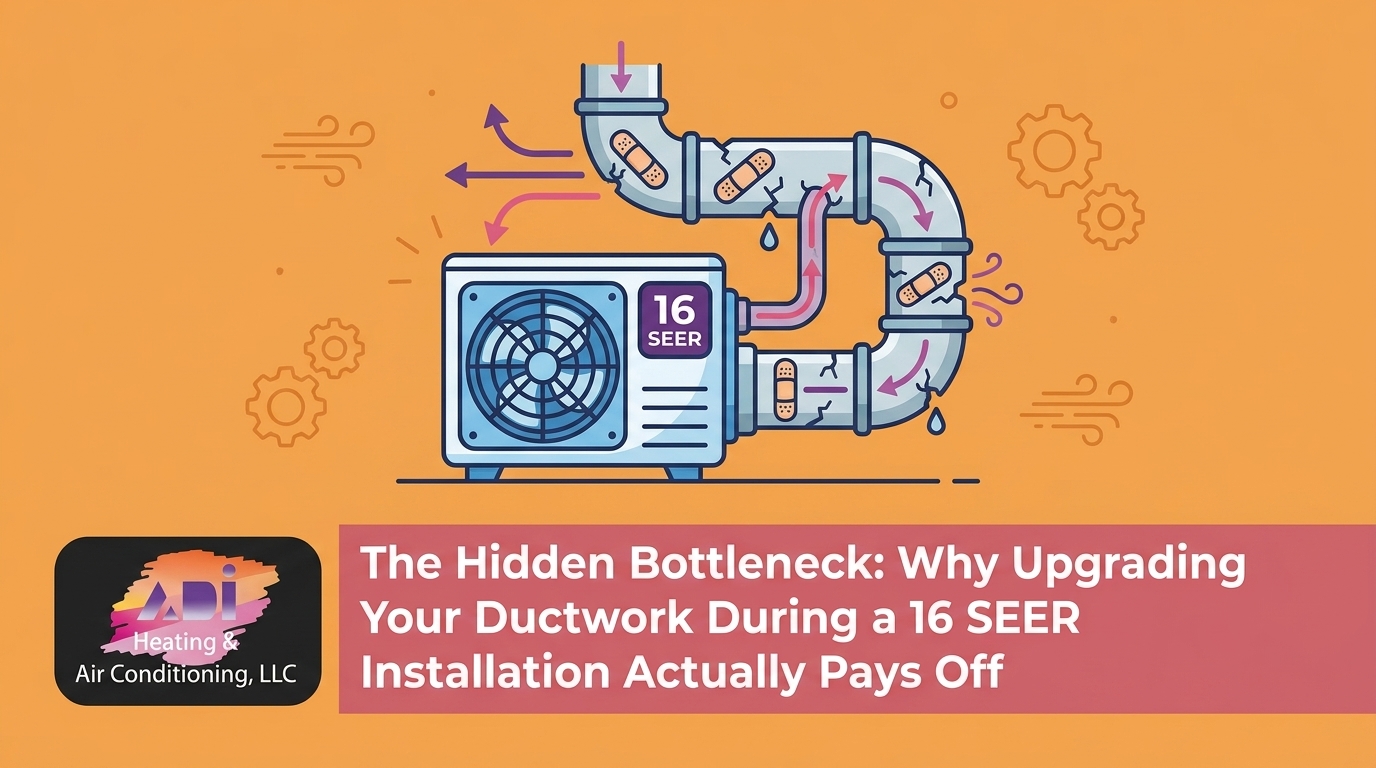
When you attach a brand-new, high-efficiency air conditioner to an old, deteriorating duct system, you create a severe bottleneck. The advanced blower motor inside your new unit is suddenly forced to push air through a network of crushed, disconnected, or undersized pipes. This mismatch immediately downgrades the performance of your new equipment. A high-efficiency unit simply cannot overcome the static pressure and air loss issues of compromised ductwork.
Turning a Premium Upgrade into Standard Performance
Ignoring the ducts essentially turns a premium upgrade into standard-efficiency performance. You are paying for the operational costs of a much lower-tier system while carrying the upfront investment of a luxury model. The conditioned air you are paying to cool escapes into your attic or crawlspace long before it reaches your bedroom or living room.
This introduces a critical decision point for any homeowner planning an upgrade: investing in duct sealing or replacement at the same time as the equipment upgrade. By treating the HVAC system as a complete, interconnected loop rather than just a box outside your house, you ensure that every ounce of cooling power you pay for actually reaches the rooms where you live and sleep.
How Leaky Ducts Sabotage Your 16 SEER Efficiency Rating
Understanding exactly how leaky ducts sabotage your new equipment requires looking past the thermostat and into the physics of home airflow. High-efficiency systems generate perfectly conditioned air, but leaky ducts lose it before it ever reaches the living space. When you schedule an AC installation, the goal is to improve comfort and reduce energy consumption, but structural leaks actively fight against both of these goals.
The Reality of Air Loss in the Home
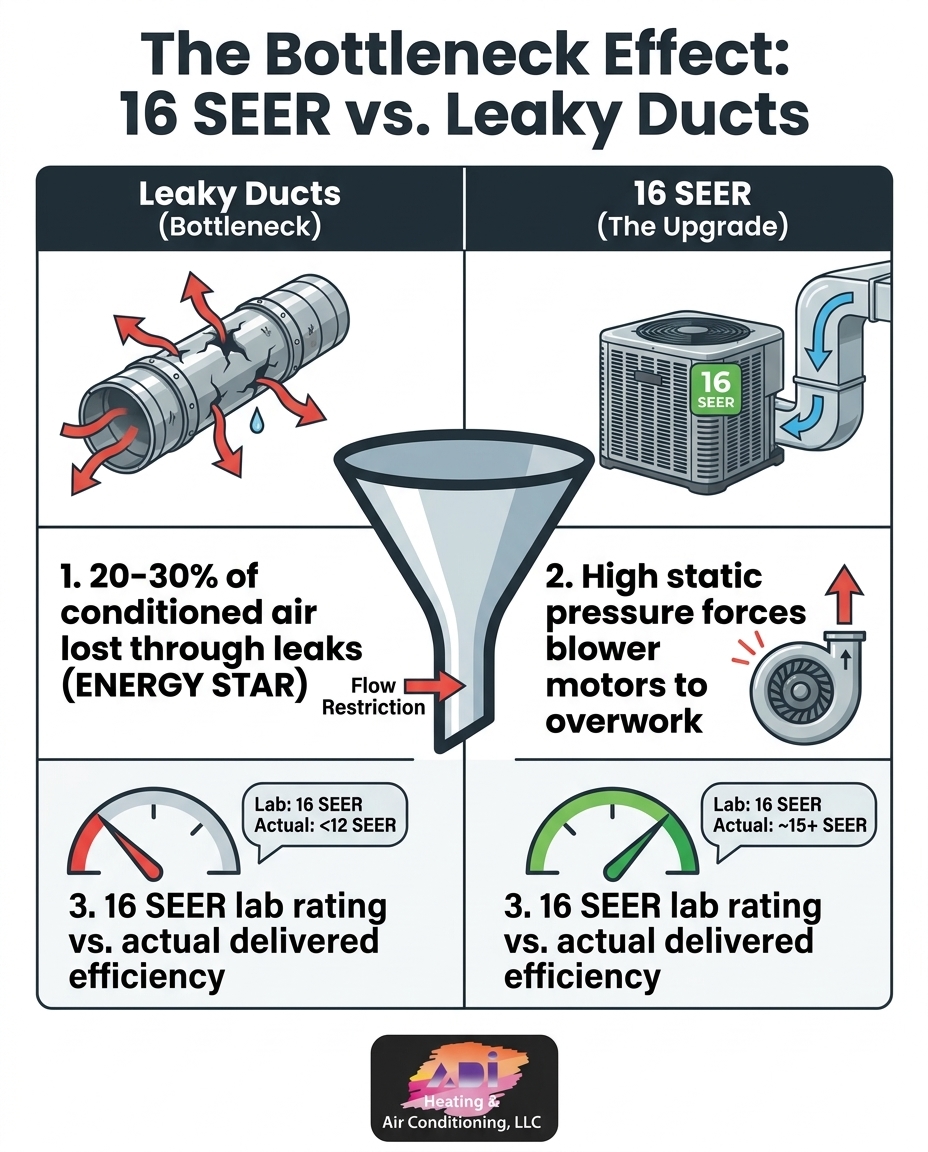
The statistics surrounding duct leakage are staggering. According to ENERGY STAR data, typical houses lose 20 to 30 percent of the air moving through the duct system due to leaks, holes, and poorly connected joints. This means that for every hour your brand-new system runs, up to a third of its output is completely wasted. It is cooling the insulation in your attic or the dirt in your crawlspace instead of the rooms you occupy.
This massive volume of air loss forces your new system to run much longer cycles to satisfy the thermostat. The longer the system runs, the more electricity it consumes, rapidly eating away at the energy savings you expected from a 16 SEER efficiency rating.
The Danger of High Static Pressure
Beyond simple air loss, aging ductwork introduces the problem of high static pressure. Static pressure is the resistance to airflow within the duct system. Undersized, crushed, or sharply bending ducts force the new blower motor to work significantly harder to push air through the home.
• Increased energy consumption: The blower motor draws more electricity to fight the resistance, negating efficiency gains.
• Premature wear and tear: Motors running under high stress run hotter and fail faster, threatening the lifespan of your new investment.
• Uneven airflow: High static pressure often results in a weak breeze coming from vents at the far ends of the house.
It is crucial to clarify that a 16 SEER rating is measured in a controlled, perfectly sealed laboratory environment. Real-world performance depends entirely on the airtightness of your home's unique infrastructure. If the delivery system is broken, the laboratory rating means very little for your actual comfort.
The Unique Challenges for Older Gaithersburg Residential Homes
The architectural history of our region presents specific challenges when it comes to modernizing climate control. In our years of servicing older Gaithersburg residential homes, our team frequently encounters original ductwork that was installed decades ago. These legacy systems were designed for a completely different era of heating and cooling technology, and we often see them struggle to support the advanced airflow requirements of modern high-efficiency units.
Original Ductwork in Unconditioned Spaces
One of the most significant architectural patterns we notice in these older homes is the routing of ductwork through unconditioned spaces. Ducts snaking through unfinished attics, basements, or crawlspaces become major sources of energy loss. With Gaithersburg's humid summers and chilly fall transitions, these unconditioned zones experience extreme temperature fluctuations.
When perfectly cooled air travels through thin, uninsulated metal pipes sitting in a sweltering summer attic, the air absorbs that heat before it ever reaches your vents. The same applies in reverse during the colder months. This thermal transfer drastically reduces the efficiency of your system.
• Sealed & Insulated in Conditioned Space — Impact on 16 SEER System: Operates at peak laboratory efficiency. — Resulting Comfort Level: Consistent, even temperatures in all rooms.
• Leaky Ducts in Unconditioned Attic — Impact on 16 SEER System: Loses 20-30% of conditioned air; high thermal loss. — Resulting Comfort Level: Hot spots, weak airflow, and high humidity.
• Undersized Original Ductwork — Impact on 16 SEER System: Creates high static pressure; strains blower motor. — Resulting Comfort Level: Loud rushing noises and frequent system cycling.
Real-World Upgrades in Action
Original ductwork was often sized for older, less efficient systems that pushed air at different velocities. Modern 16 SEER equipment requires precise airflow to balance humidity and temperature effectively. For instance, our technicians recently helped a local homeowner who needed to install two HVAC units to handle their older property's layout. We arrived on time and provided a fair, comprehensive assessment, ensuring both units were installed successfully by addressing the structural limitations of the home's original ductwork alongside the new equipment.
Upgrading both systems simultaneously guarantees maximum efficiency. If your home has aging infrastructure, scheduling professional ductwork services alongside your equipment replacement is the most effective way to protect your investment and secure true whole-home comfort.
Why the September Pre-Heating Season Transition is the Ideal Time to Act
Timing plays a massive role in HVAC performance and system longevity. The September pre-heating season transition is arguably the most critical time of year for your home's climate infrastructure. As the intense summer heat begins to fade, homeowners often lower their guard, assuming their system can coast through the mild weeks ahead. However, this transition period is exactly when hidden ductwork issues need to be resolved.
Shifting the Thermal Load
During the fall transition, your ductwork must prepare to handle a completely different thermal load. Switching from air conditioning to heating changes how the system operates and how the air interacts with the duct materials. Metal ducts expand and contract with temperature changes, and seams that leaked slightly during the summer can separate further under the stress of high-heat cycles.
Addressing duct leaks now ensures that both the newly installed cooling system and the upcoming winter heating load operate at peak efficiency. With the upcoming chilly fall transition in Gaithersburg, preparing the system for winter heating loads is not just about comfort; it is about preventing massive energy waste.
Protecting Heated Air from Freezing Attics
Preventing conditioned heated air from escaping into a freezing attic is just as important as preventing cooled air from escaping into a hot attic. When winter arrives, a leaky duct system will pump your expensive, freshly heated air directly into the uninsulated roof space. This forces your furnace or heat pump to run continuously just to keep the main living areas reasonably warm.
By taking action during the September pre-heating season transition, you give your 16 SEER system the solid, airtight foundation it needs to switch seamlessly between cooling and heating without missing a beat or wasting energy.
Beyond the Box: Evaluating the 'Lungs' of Your Home
There is a massive difference between a simple equipment swap and a comprehensive climate control upgrade. A basic "box swap" involves disconnecting the old air conditioner and plugging a new one into the exact same flawed infrastructure. This approach ignores the underlying issues that likely caused the old system to fail in the first place.
The Holistic Installation Standard
True professionals take a holistic approach, evaluating the "lungs" of the house—the distribution system—to guarantee the promised efficiency of a 16 SEER unit. At ADI Heating & Air Conditioning, we set this holistic installation process as our standard, emphasizing a deep commitment to assessing the entire distribution network rather than just selling you a piece of equipment.
During our comprehensive installation consultations, the process of inspecting duct integrity goes far beyond a quick visual check. Our technicians measure static pressure to see exactly how hard the current system is working to move air. They identify hidden leaks, assess the insulation levels on exposed pipes, and verify that the return air pathways are large enough to feed a modern, high-efficiency blower motor.
Meeting Efficiency Standards
This deep evaluation is also critical for long-term financial benefits. Many generic energy rebates or federal tax credits for high-efficiency upgrades require the installed system to perform to a certain standard. If your new 16 SEER unit is severely bottlenecked by leaky ducts, it may not meet the overall home efficiency improvements required by these programs. By investing in comprehensive energy efficiency services that include duct assessment and sealing, you ensure your home actually achieves the performance benchmarks that lower your monthly bills.
Key Indicators That Your Ductwork Needs Attention
You do not need specialized diagnostic tools to notice when your ductwork is failing. The symptoms of compromised air distribution usually manifest as daily annoyances that homeowners eventually accept as "normal." If you are planning to upgrade to a 16 SEER efficiency rating, look for these clear signs that your ducts need professional attention first.
1. Uneven temperatures between different rooms or floors: If your master bedroom is always five degrees hotter than the living room, or the second floor feels like a sauna while the basement is freezing, your ductwork is failing to distribute air evenly. This is often caused by severe leaks or undersized branches leading to specific rooms.
2. Excessive dust buildup around vents or throughout the home: Leaky ducts in unconditioned spaces do not just lose air; they pull air in. When the system turns on, negative pressure can suck dust, fiberglass insulation, and crawlspace dirt into the ductwork and blow it directly into your living spaces.
3. Noticeable whistling or rushing air noises when the system runs: A properly sized duct system should be relatively quiet. High-pitched whistling, rattling metal, or the sound of a wind tunnel are strong indicators of high static pressure. The system is trying to force too much air through too small of an opening, which means you need proper duct sizing to quiet the system down and protect the blower motor.
4. Higher than expected utility bills despite having new equipment: If you recently upgraded your HVAC unit but your monthly energy bills have barely dropped, the efficiency is being lost in transit. The new system is working overtime to compensate for the air escaping through the ductwork.
Addressing these indicators before or during a new installation ensures that your new equipment will not inherit the exact same problems that plagued your old unit.
Frequently Asked Questions About 16 SEER Systems and Ductwork
Should I replace my ductwork when I replace my AC?
Not always, but it should be thoroughly inspected by a professional before the new unit is installed. If the existing ducts are severely damaged, drastically undersized for modern equipment, or poorly designed, replacement is necessary to support the new unit. However, if the ductwork is structurally sound but simply leaky, professional sealing may be all that is required.
How do leaky ducts affect SEER ratings?
Leaky ducts waste perfectly conditioned air by venting it into unconditioned spaces like attics or crawlspaces, meaning the system has to run much longer to cool the home. This effectively lowers the delivered efficiency of the equipment. Because of this air loss, a premium 16 SEER unit can end up performing like a much lower-rated, standard-efficiency system.
How much efficiency is lost through leaky ducts?
According to ENERGY STAR, up to 20 to 30 percent of the air moving through a typical residential duct system can be lost due to leaks, holes, and loose connections. This translates directly to wasted energy, diminished indoor comfort, and significantly higher utility bills every month.
Can old ductwork ruin a new AC unit?
Yes, restrictive or undersized ducts dramatically increase the static pressure within the system. This forces the new blower motor to work much harder to circulate air throughout the house. Over time, this constant strain can lead to overheating, premature wear and tear, and early failure of the new equipment.
Is duct sealing a viable alternative to full replacement in older homes?
If the existing ductwork is properly sized for the new equipment and structurally sound, professional sealing can completely resolve air loss issues without the need for a full replacement. A professional diagnostic assessment is required to determine if sealing is sufficient or if the layout itself needs to be modified.
Ensure Your System Breathes Easy This Fall
Upgrading the "lungs" of your house is absolutely necessary to get the premium performance and energy savings you expect from a new 16 SEER unit. Without airtight, properly sized ductwork, even the most advanced cooling and heating equipment will struggle to keep your home comfortable.
Before the September pre-heating season transition comes to an end, take the time to have your entire distribution system evaluated. By addressing the hidden bottlenecks now, you ensure that your home receives a clear, logic-based solution for maximum delivered efficiency, keeping your family perfectly comfortable through every season.
Customer Testimonials