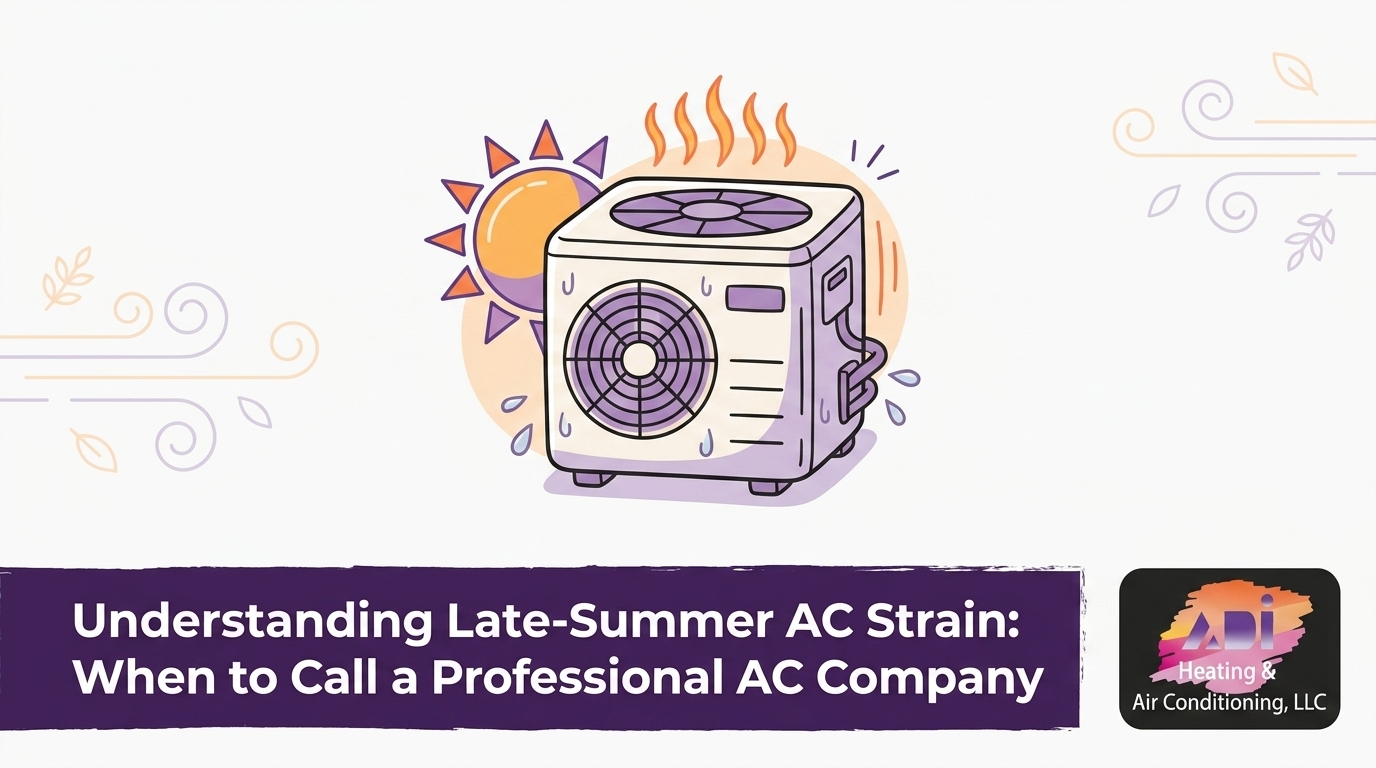


Understanding Late-Summer AC Strain: When to Call a Professional AC Company
Navigating Late-Summer AC Struggles and Indoor Humidity
Your air conditioner is running nonstop, but your home still feels warm and sticky, which is why finding local service expertise and area tips is the best way to understand what is going wrong. It is incredibly frustrating when your cooling system begins to lose its capacity just as the late August heat peaks. After working tirelessly since the spring, your equipment is tired. You might notice that the vents are blowing air that is cool, but not cold enough to make a difference. This leaves you at a critical decision point: do you ignore the underperformance and hope the system survives until the fall weather arrives, or do you schedule a professional diagnostic right now?
When you need help restoring your home's comfort, exploring comprehensive air conditioning services or booking professional HVAC services ensures your system gets the exact care it requires.
The Reality of End-of-Season Fatigue
Many homeowners in Gaithersburg MD assume that a struggling air conditioner is just a normal part of hot weather. However, a sudden drop in cooling capacity is usually a warning sign of underlying mechanical strain. Ignoring these early symptoms often leads to complete system breakdowns on the hottest days of the year. Addressing these issues promptly with a licensed technician is the safest way to protect your investment.
Latent cooling strain—which is your system's ability to remove moisture from the air—is notoriously difficult to diagnose without the right tools. Comprehensive professional care is required to accurately measure airflow, check refrigerant pressures, and determine exactly why your home feels so uncomfortable. By taking action now, you prevent minor wear and tear from turning into a major, costly repair.
The Cumulative Toll of August Heat on Your Cooling System
To understand why your system is struggling, you have to look at the cumulative toll of months of continuous operation. Your air conditioner does not just cool the air; it also acts as a massive dehumidifier. During the August late-summer cooling season, the system faces its toughest test. Month after month, the blower fan pulls air across the indoor evaporator coil. Over time, household dust, pet dander, and airborne particles bypass the filter and stick to the damp coil.
The Problem: This layer of grime acts as an insulator. It prevents the cold refrigerant inside the coil from absorbing heat out of your indoor air. As a result, the air blowing out of your vents feels lukewarm, and the system has to run twice as long to reach the temperature set on your thermostat.
The Cause: In Gaithersburg, our specific late-summer climate—combining temperatures in the mid-to-upper 80s with high humidity—creates excessive condensate wear. High relative humidity increases the latent cooling load, forcing your system to run longer, more stressful cycles just to ring the moisture out of the air before it can even begin to lower the temperature.
The Solution: A properly maintained AC system can retain up to 95 percent of its original capacity and efficiency, standing in stark contrast to neglected units that struggle to keep up. Professional maintenance restores the heat transfer process and relieves the mechanical stress on the compressor.
Tracking the Progression of System Wear
• Early Summer (June) — Coil Condition: Clean and efficient — Humidity Load: Moderate — Cycle Length: Normal, short cooling cycles
• Mid-Summer (July) — Coil Condition: Light dust accumulation — Humidity Load: High — Cycle Length: Extended cycles to manage heat
• Late Summer (August) — Coil Condition: Heavily coated with grime — Humidity Load: Severe — Cycle Length: Continuous running, poor cooling
This cumulative stress always peaks right before the seasonal transition. Late summer is a critical vulnerability period, making it the most likely time for an aging or unmaintained system to fail completely.
Critical Signs It Is Time to Call an AC Company
Recognizing the early warning signs of system failure can save you from a miserable, sweltering weekend. If you notice any of the following symptoms, it is time to bring in a professional to evaluate your equipment.
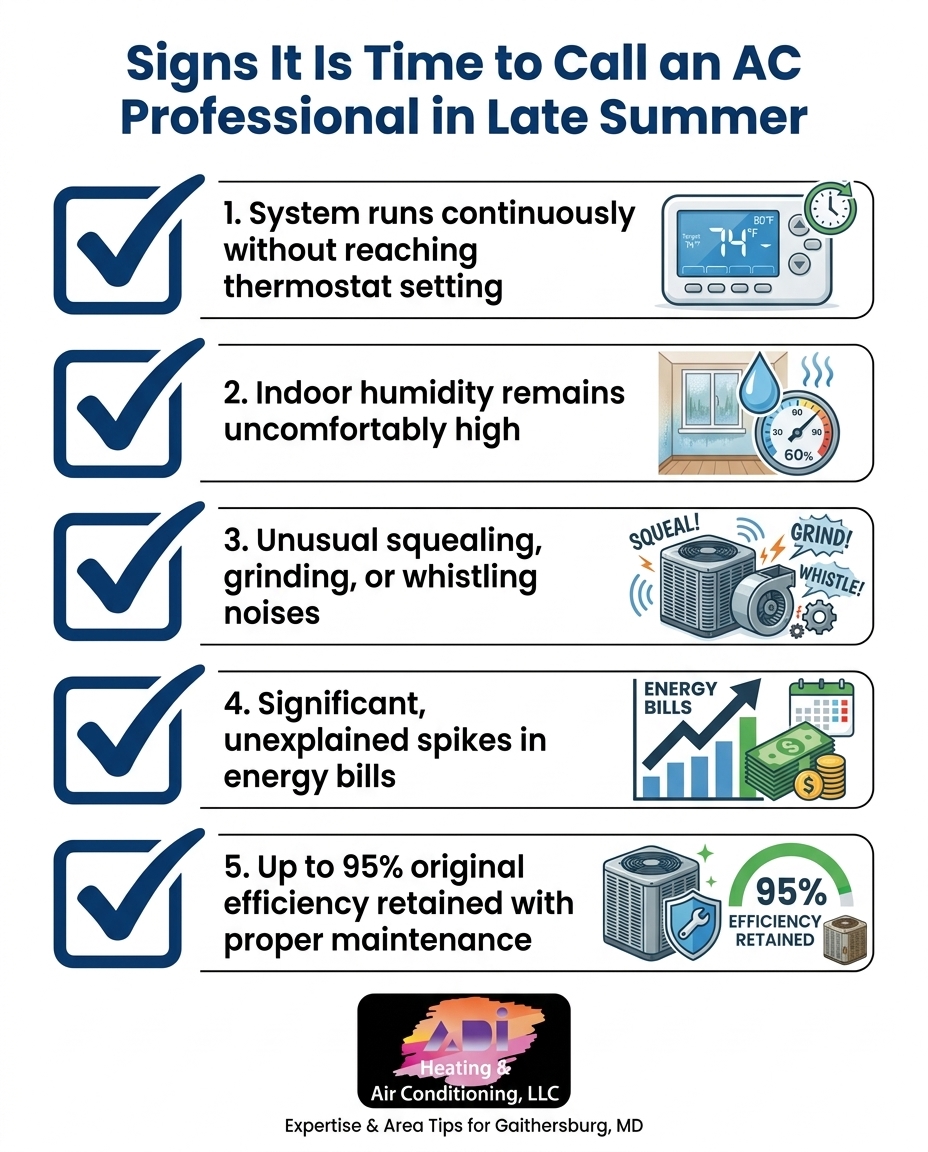
• Continuous operation without relief: The system runs continuously but fails to lower the indoor temperature to the thermostat setting. If your thermostat is set to 72 degrees but the house stays at 78 degrees, the unit has lost its cooling capacity.
• Uncomfortable indoor humidity: Indoor humidity levels remain uncomfortably high despite the AC running. If your skin feels clammy and the air feels heavy, the system is failing to manage the latent heat load.
• Strange, disruptive noises: Unusual noises indicate major mechanical stress. If you are wondering why your AC is making a whistling sound, it usually points to a severe airflow restriction or a dangerous refrigerant leak. Grinding or squealing sounds often point to failing blower motors or worn-out compressor bearings.
• Unexplained energy bill spikes: Energy bills spike significantly compared to the same period in previous years. When a system loses efficiency, it consumes far more electricity to do the same amount of work, signaling a severe drop in performance.
The Risks of Delaying Professional Diagnostics
When the air conditioner starts acting up in late August, it is tempting to simply wait it out. You might think that the upcoming fall weather transition will naturally solve your cooling loss. This is a critical mistake. Cooler weather outside merely masks the underlying mechanical damage inside your system. If a motor is burning out or a coil is frozen, letting it sit idle over the winter guarantees that you will face a broken AC on the first hot day of the following spring.
The Hidden Dangers of Do-It-Yourself Repairs
It is equally dangerous to attempt DIY fixes for complex end-of-season cooling issues. Modern HVAC systems are highly sophisticated pieces of machinery. They operate using high-voltage electricity and pressurized chemicals that require specialized training to handle safely. Refrigerant handling and electrical diagnostics require strict licensing and compliance with federal safety regulations.
Attempting to recharge your own refrigerant or bypass a failing electrical contactor can result in severe injury, voided equipment warranties, and catastrophic damage to the compressor. A reliable expert safely diagnoses the root cause of humidity and cooling loss without resorting to risky temporary patches. They use calibrated digital gauges to measure superheat and subcooling, ensuring the system operates exactly as the manufacturer intended.
How a Reliable Contractor Approaches Complex Cooling Loss
Knowing what to expect from a dependable professional takes the stress out of scheduling a service call. A trustworthy technician arrives promptly, especially during extreme heatwaves, equipped with the necessary diagnostic tools and replacement parts right on their truck.
One local homeowner experienced this firsthand when their air conditioning began to fail during an extreme summer heatwave. Recognizing the urgent need for cooling, ADI Heating & Air Conditioning routed a technician who arrived within an hour. Because the technician carried the necessary diagnostic tools and parts, they identified the problem immediately. The outcome was a system that was cooling the house smoothly again within 30 minutes of the technician's arrival. This reflects ADI Heating & Air Conditioning's proven track record of highly responsive, local expertise in accurately diagnosing late-summer breakdowns.
Transparency and Long-Term Solutions
A quality contractor provides clear, transparent explanations of the issue rather than using technical jargon to confuse the homeowner. They will show you exactly what has failed, explain why it happened, and lay out your options clearly. Instead of pushing a quick fix that might fail a week later, they focus on long-term safety and efficiency, offering solutions that restore your cooling capacity rapidly and reliably.
Proactive Strategies: Maintenance Plans and System Transitions
The best way to handle late-summer breakdowns is to prevent them from happening in the first place. Routine care prevents the severe end-of-season efficiency drops that lead to emergency calls. When a professional cleans the coils, clears the condensate drain lines, and tightens the electrical connections, the system operates with far less strain.
Another area homeowner found long-term peace of mind by prioritizing this exact kind of ongoing care. After needing a new HVAC system installation, they signed up for both winter and summer service. The contractor installed the new equipment and established a reliable service agreement. As a result, the new system has saved them a significant amount on energy costs while providing a consistently comfortable environment year-round.
The Value of Ongoing Agreements
Enrolling in an ongoing service agreement ensures your system is monitored year-round. Comprehensive maintenance plans are the standard for long-term reliability and a key differentiator of a quality contractor. By securing an HVAC maintenance plan, you ensure that a professional is tracking the health of your system before the heavy summer heat arrives and right after it ends. Proactive maintenance not only saves money on energy costs by keeping efficiency high, but it also significantly extends the operational lifespan of the equipment.
Evaluating Long-Term Comfort and Efficiency Upgrades
Sometimes, a late-summer diagnostic reveals that a system replacement is more viable than a repair. If your air conditioner is over ten to twelve years old, uses outdated refrigerant, and suffers from repeated late-summer breakdowns, it is likely no longer cost-effective to keep patching it up. Pouring money into a failing compressor is often a poor investment compared to the energy savings provided by new technology.
Understanding Modern Efficiency Ratings
When evaluating an upgrade, the importance of a contractor who clearly explains efficiency ratings cannot be overstated. A reliable professional will walk you through SEER (Seasonal Energy Efficiency Ratio) ratings and explain how modern, variable-speed equipment options provide far superior humidity control compared to older, single-stage units. Variable-speed units run longer, slower cycles, which excel at pulling moisture out of the air without overcooling the house.
• Cost Efficiency — Repairing an Aging Unit: High energy bills continue — Upgrading to a Modern System: Lower monthly operating costs
• Reliability — Repairing an Aging Unit: Prone to future breakdowns — Upgrading to a Modern System: Dependable, steady performance
• Warranty — Repairing an Aging Unit: Parts often out of warranty — Upgrading to a Modern System: Protected by new manufacturer warranties
• Comfort Control — Repairing an Aging Unit: Struggles with late-summer humidity — Upgrading to a Modern System: Advanced moisture and temperature control
If you want a highly efficient solution that can handle both late-summer cooling and upcoming fall heating needs, exploring modern heat pump services is an excellent choice. Heat pumps provide robust air conditioning in the summer and reverse their operation to provide energy-efficient warmth throughout the winter.
Frequently Asked Questions About End-of-Season AC Performance
Why is my AC struggling to cool in late summer?
Your AC struggles in late summer due to cumulative wear, dirty evaporator coils, and the impact of sustained high humidity. Over the months, dust builds up on the indoor coil, which acts as an insulator and blocks heat transfer. Combined with the heavy moisture in the August air, the system has to work twice as hard just to dehumidify, leaving very little capacity to actually cool the room.
What should I look for in an AC diagnostic service?
You should look for verified licensing, clear transparency, thorough testing procedures, and a focus on long-term solutions. A proper diagnostic involves checking refrigerant pressures, measuring electrical draw, and testing airflow, rather than just guessing at the problem. A reputable technician will explain their findings clearly without using high-pressure sales tactics.
Should I fix my AC or call a professional?
You should always call a licensed professional for any issue involving electrical components or refrigerant. We strongly advise against DIY repairs for these systems due to extreme safety hazards and strict compliance risks. Handling high-voltage capacitors or pressurized chemicals without proper training can result in severe injury and permanent damage to your equipment.
How can I tell if high humidity is causing my cooling loss?
You can tell high humidity is the culprit if your indoor air feels clammy and heavy even when the thermostat reads a lower temperature. The air blowing from your vents might feel cool, but the environment remains sticky and uncomfortable. This indicates that the air conditioner is running, but it has lost its ability to effectively remove latent heat (moisture) from the home.
Are there tax credits available for upgrading an old AC system?
Generally applicable energy rebates or federal tax credits may apply to qualifying high-efficiency installations. Programs frequently change and vary based on the specific equipment you choose, such as advanced heat pumps. We advise readers to verify current rebate programs and tax incentives with a professional contractor or their local utility provider during the estimate process.
Taking the Next Step Toward Reliable Indoor Comfort
Understanding exactly why AC units lose efficiency at the end of the season empowers you to make smart, proactive maintenance decisions. When you recognize the signs of late-summer strain, you can act quickly before minor wear turns into a major breakdown. Calling a licensed professional for diagnostics is always the safest, most effective route to restore your home's comfort. By seeking out local service expertise and area tips from a trusted contractor, you can learn more about comprehensive cooling solutions and ensure your system is ready for whatever the weather brings before the season ends.
Customer Testimonials