

How to Safely Turn on a Furnace for Winter: Normal Dust vs. a Cracked Heat Exchanger
The November First-Freeze: Navigating the Initial Furnace Ignition
When the sudden November first-freeze hits Gaithersburg, our team at ADI Heating & Air Conditioning often receives a flood of calls from homeowners prioritizing how to safely turn on a furnace for winter. After sitting dormant for months, your heating system is suddenly called upon to perform at maximum capacity. This initial ignition cycle often brings a wave of anxiety, primarily due to the distinct burning odor that fills the home within minutes of the thermostat clicking on. For anyone experiencing this, the immediate question we hear is whether the system is simply clearing out summer dust or if there is a hazardous malfunction threatening the household.
Understanding exactly what happens inside your heating equipment during this critical first run is the key to protecting your property. The decision you make in those first few minutes—whether to let the system run its course or to immediately shut it down at the thermostat—depends entirely on recognizing the difference between harmless seasonal burn-off and critical combustion hazards. By taking a safety-first, diagnostic approach to your winter furnace startup, you can navigate the seasonal transition with confidence.
If you need professional support preparing your home for the cold, explore our heating services or schedule a comprehensive furnace maintenance plan today.
Preparation Checklist Before Touching the Thermostat
Before you even approach the thermostat for that crucial November first-freeze startup, there are physical preparations required around your heating equipment. In our years of providing HVAC services across Maryland, we've seen firsthand how rushing the startup process without checking these basic safety items can turn completely avoidable hazards into expensive emergencies. Follow this actionable checklist to ensure your system has a safe environment to operate in.
1. Clear the physical perimeter around the furnace unit: Over the summer, utility closets and basements often become makeshift storage areas. Ensure there is a minimum of three feet of completely clear space on all sides of the furnace. Remove any boxes, cleaning supplies, seasonal decorations, or flammable materials. A furnace requires unobstructed airflow to draw in combustion air safely, and crowding the unit introduces an immediate fire hazard.
2. Swap out the old air filter for a clean one: A clogged filter restricts airflow, forcing the blower motor to work harder and increasing the internal temperature of the furnace. This not only exacerbates the initial burning odor but can also cause the system to overheat and shut down prematurely. Installing a fresh filter is one of the most effective indoor air quality solutions for reducing startup dust and ensuring optimal system efficiency.
3. Verify that all vents and registers are fully open: Walk through every room in your home and check the supply and return registers. Even in unused guest rooms, vents should remain open. Closing vents disrupts the carefully balanced static pressure of your HVAC system, causing the blower motor to strain and potentially leading to premature component failure. Ensure no rugs, furniture, or heavy curtains are blocking the airflow.
4. Test all household carbon monoxide detectors: Before any combustion begins inside your home, you must verify that your early warning systems are active. Press the test button on every carbon monoxide detector to ensure the alarms sound loudly. If the units are battery-operated, install fresh batteries regardless of when they were last changed. This step is non-negotiable before initiating the first heating cycle of the year.

Why Your Furnace Smells Like Burning Dust (And How Long It Lasts)
For Gaithersburg area homes transitioning from mild late fall weather to sudden freezing temperatures, the heating system often sits completely idle for over half the year. During these dormant months, microscopic particles inevitably find their way into the ductwork and the furnace cabinet itself. Household dust, pet dander, lint, and airborne debris naturally settle directly onto the burners, the heat exchanger, and the surrounding internal components.
When the thermostat finally calls for heat, the burners ignite, and the metal heat exchanger rapidly warms up to hundreds of degrees. The settled dust and debris resting on these hot surfaces are instantly incinerated. This harmless burn-off process produces a very distinct, dusty, slightly singed odor that the blower motor then pushes through the ductwork and into every room of your house. Because the system has not run in months, this sudden influx of odor can be alarming, but our technicians always reassure homeowners that it is a standard mechanical reality of forced-air heating.
The most important factor here is the timeline. A normal burning dust smell should dissipate entirely within 30 to 60 minutes of the system running its first full cycle. The odor is finite; once the accumulated summer dust has burned away, the smell will vanish. To make the process more comfortable, you can temporarily open a few windows to help ventilate the home while the dust clears. If the smell changes in character or outlasts this specific timeframe, you are no longer dealing with simple dust.
Red Flag Odors: When to Shut the System Down Immediately
While a temporary dusty smell is expected, other sensory warning signs dictate an immediate system shutdown. Contrasting the harmless dust burn-off with dangerous red flags is critical for protecting Gaithersburg area homes from severe damage or safety hazards. If you detect any of the following odors, turn the system off at the thermostat immediately. These are not DIY troubleshooting opportunities; they require immediate professional intervention.
• Rotten Eggs (Sulfur) — Likely Cause: Natural gas leak. Gas companies add a chemical called mercaptan to odorless natural gas specifically to create this distinct, alarming smell. — Required Action: Evacuate the home immediately. Do not turn on lights or use electronics. Call your utility provider and emergency services from outside.
• Burning Plastic or Ozone — Likely Cause: Electrical failure. This indicates melting wire insulation, a failing capacitor, or an overheating blower motor that is drawing too much amperage. — Required Action: Shut off the furnace at the thermostat and cut power at the breaker panel. Call a licensed HVAC technician for electrical diagnostics.
• Persistent Burning Dust — Likely Cause: Airflow restriction or severe internal buildup. If a dusty smell lasts longer than 60 minutes, the system is likely overheating due to a clogged filter or blocked vents. — Required Action: Turn off the system. Verify the air filter is clean and vents are open. If the smell returns upon restart, request professional service.
• Visible Smoke or Exhaust — Likely Cause: Severe combustion issue, blocked flue pipe, or major component failure causing exhaust gases to backdraft into the home. — Required Action: Shut down the system instantly. Evacuate if smoke fills the room. Contact a certified technician for an emergency safety inspection.
The Hidden Danger: What is a Cracked Heat Exchanger?
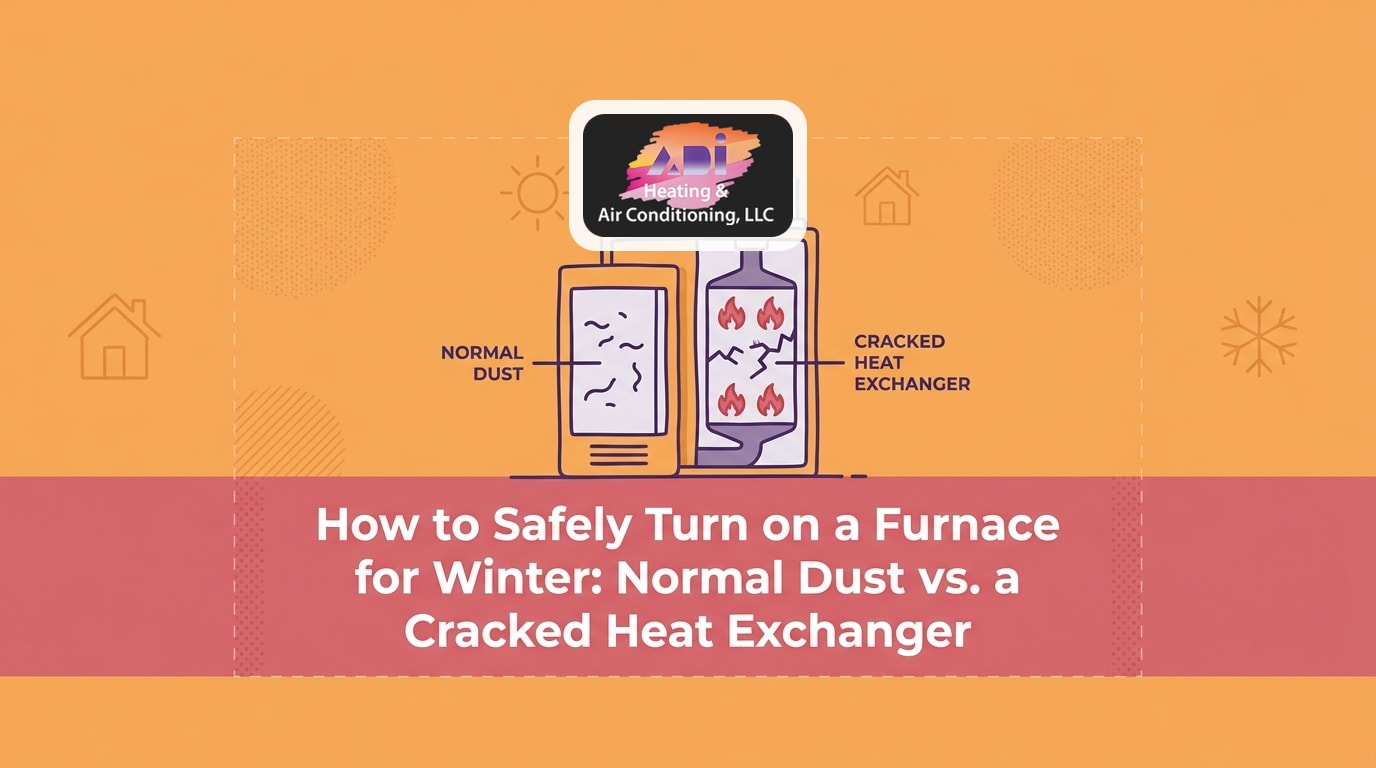
While strange odors are concerning, the most critical winter furnace hazard often produces no smell at all. To understand this danger, you must first understand the role of the heat exchanger. The heat exchanger is the essential metal barrier located at the core of your furnace. Its job is to keep the toxic, superheated combustion gases (created by burning natural gas or propane) completely separate from the clean, breathable air that the blower motor circulates through your home's ductwork.
The Mechanics of Metal Fatigue
Every time your furnace cycles on, the heat exchanger rapidly expands as it absorbs intense thermal energy. When the cycle ends, the metal cools and contracts. Over many years of enduring the November first-freeze and subsequent harsh winter weather, this constant expansion and contraction causes metal fatigue. Eventually, the stressed metal can develop microscopic cracks, stress fractures, or rusted-out holes.
The Severe Risk of Cross-Contamination
When a heat exchanger cracks, the airtight seal is broken. This allows deadly combustion exhaust—including carbon monoxide (CO), sulfur dioxide, and nitrous oxide—to leak out of the combustion chamber and mix directly with the indoor air supply. Because the blower motor is actively pushing air through the home, these toxic gases are rapidly distributed into every bedroom and living space.
The danger is so severe that industry safety standards dictate strict rules: if a heat exchanger is verified to be cracked, the furnace is legally and safely condemned. It cannot be repaired with patches or sealants. In most cases, a cracked heat exchanger requires a full system replacement. For homeowners looking to upgrade after a failure, modern heat pump systems offer an alternative that eliminates the risk of carbon monoxide entirely, as they do not rely on fossil fuel combustion to generate heat.
Why Carbon Monoxide Detectors Are Your Only Reliable Warning
The most terrifying aspect of a cracked heat exchanger is that you cannot rely on your senses to detect it. While a burning dust smell is highly noticeable and a natural gas leak smells like sulfur, carbon monoxide is completely odorless, colorless, and tasteless. A severely damaged furnace could be pumping dangerous levels of CO into Gaithersburg area homes without producing a single visual or olfactory warning sign. This is why functional carbon monoxide detectors are not just a recommendation; they are your only reliable, life-saving warning system.
Proper Placement for Maximum Protection
To ensure your family is protected during the heating season, detectors must be placed strategically according to Environmental Protection Agency (EPA) and Consumer Product Safety Commission (CPSC) guidelines. Because carbon monoxide mixes evenly with the air, detectors should be installed on every single level of the home, including the basement. Most importantly, they must be placed directly outside all sleeping areas so that the alarm is loud enough to wake occupants from a deep sleep.
Responding to an Alarm
Never assume a carbon monoxide alarm is a false positive, especially if it triggers while the heating system is actively running. A triggering CO alarm during a heating cycle means the furnace must be shut down instantly at the thermostat. Open all doors and windows to ventilate the property, evacuate the home, and do not re-enter until emergency services or the utility company have verified that the air is clear and the source of the leak has been identified.
The Limits of DIY: Why Heat Exchanger Inspections Require a Professional
With the high stakes surrounding carbon monoxide and combustion safety, it is vital to understand the limits of DIY maintenance. Homeowners should absolutely change their filters, clear the area around the unit, and test their alarms. However, inspecting the internal combustion components of a furnace is strictly the domain of certified professionals. Microscopic cracks in a heat exchanger are often invisible to the naked eye. Furthermore, they frequently occur in the deep, inaccessible curves of the metal casing that cannot be seen without dismantling the furnace housing.
The Tools of the Trade
Certified professionals do not rely on visual guesswork. At ADI Heating & Air Conditioning, our technicians use specialized, highly calibrated tools to verify the integrity of the heat exchanger. We utilize digital combustion analyzers to measure the exact parts-per-million of gases in the exhaust flue, looking for anomalies that indicate a breach. We also use flexible infrared inspection cameras to snake deep into the heat exchanger cells, visually identifying hairline fractures that would otherwise go unnoticed.
The Value of Certified Expertise
Homeowners must never dismantle furnace housing, tamper with gas lines, or attempt to inspect combustion chambers themselves. Disturbing these components without proper training can inadvertently cause the exact gas leaks or exhaust breaches you are trying to prevent. Instead, rely on professional safety inspections and certified expertise to give you absolute peace of mind regarding carbon monoxide risks. Comprehensive seasonal maintenance catches these invisible issues before the freezing weather sets in. Reviewing an essential furnace maintenance checklist can help you understand exactly what a professional covers during these vital service visits.
Ensure a Safe Heating Season With Professional Verification
Navigating the November first-freeze doesn't have to be a source of stress. By understanding the mechanics of your heating system, you now have the clear criteria needed to evaluate that initial startup. Remember that a brief, 30-to-60-minute burning dust smell is a normal, harmless part of the seasonal transition. However, persistent odors, the smell of sulfur or melting plastic, and any alert from a carbon monoxide detector are absolute red flags that require immediate action.
You don't have to guess when it comes to the safety of your home's heating equipment. Having a certified technician evaluate the system ensures that the burners are clean, the airflow is unobstructed, and the heat exchanger is completely intact and sealing away dangerous exhaust gases. To guarantee a safe, reliable, and efficient heating season all winter long, schedule your furnace maintenance plan visit today and let the ADI Heating & Air Conditioning professionals verify your system's integrity.
Frequently Asked Questions
Why does my furnace smell like burning when I first turn it on?
This odor is typically caused by the incineration of household dust and debris that settled on the internal components over the summer. When the burners ignite for the first time, this accumulated dust burns off rapidly. It is a normal mechanical process for forced-air systems that have sat dormant for months. As long as the smell resembles dusty, singed air and not melting plastic or sulfur, it is generally harmless.
How long should a furnace smell when first turned on?
The harmless burning dust smell should dissipate completely within 30 to 60 minutes of the system running its first full heating cycle. Once the settled debris has burned away from the heat exchanger and burners, the odor will stop. If a burning smell persists beyond this one-hour window, or if it returns every time the system cycles on, you should turn off the unit and call a professional, as it may indicate an airflow restriction or overheating component.
What are the signs of a cracked heat exchanger?
The most definitive and dangerous sign of a cracked heat exchanger is a triggering carbon monoxide detector, as CO is completely odorless and invisible. Other physical signs include soot buildup inside the furnace cabinet, a yellow or dancing burner flame instead of a steady blue one, and visible corrosion or rust on the exterior of the furnace components. Because these cracks are often microscopic, a professional inspection using a combustion analyzer is the only way to confirm the damage.
Is it safe to just turn my furnace on?
It is safe to turn your furnace on only after you have completed a few basic physical checks around the equipment. You must ensure the area around the unit is clear of flammable materials, install a fresh air filter to prevent overheating, and verify that your carbon monoxide detectors have fresh batteries and are functioning correctly. Skipping these basic preparatory steps can turn a routine startup into a safety hazard or cause unnecessary strain on the blower motor.
How often should I test my CO detectors during winter?
You should test your carbon monoxide detectors at least once a month throughout the entire winter heating season. Simply press the test button on the face of the unit to ensure the audible alarm sounds loudly and clearly. Additionally, batteries should be replaced at least once a year, typically coinciding with your initial fall furnace startup, to ensure uninterrupted protection when your heating system is working its hardest.
Customer Testimonials